
Prunes and Speck
Two Americans in Champagne

Prunes? Prunes??? How is it possible that they were so good? I am right now trying to recreate the prunes we ate at our bed and breakfast in Épernay by soaking them with cooked orange and lemon rinds, but I think it’s beyond me. Was it elderflower? Not honey, because they don’t need anymore sweetness. Not vanilla; the flavor was too light.
Whatever spell had been cast over them, they didn’t taste like prunes anymore, and they weren’t thick and sticky…they were soft, pillowy, light somehow. I understood stewed prunes for the first time ever, and I reconsidered, only mildly, given what the English have historically done to food, the extent of my outrage about the lesser meals served to the women’s college at Oxford, described by Virginia Woolf in A Room of One’s Own.
We acknowledged, our first morning, that fortified by a breakfast like the one laid out by our host, Valerie, there’s nothing you can’t do in a day: stewed and fresh fruit, yogurt, oatmeal, a cheese board, sliced meats, a basket of fresh viennoiserie (croissant, pain et chocolat), baguette, butter, jam, coffee, juice. Valerie asked every morning if we wanted “un œuf”; every morning we said we did. About 6 minutes later, we’d hear two cracks! and out would come two perfectly soft-boiled eggs in egg cups, their opened “lids” emitting a gentle steam.
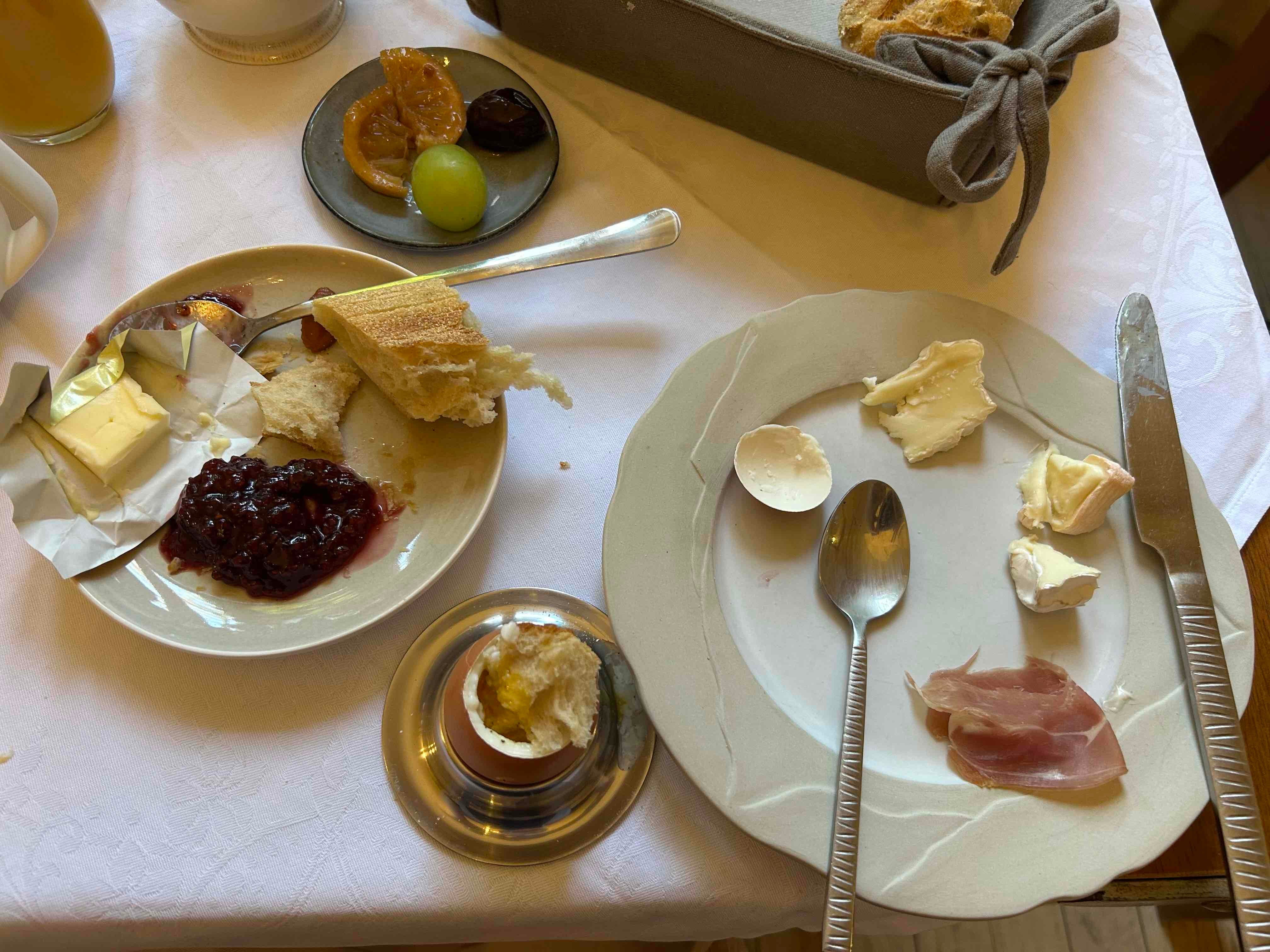
We made little sandwiches with the pieces of baguette from our basket that we didn’t eat, trying to skirt the line between not wanting to be wasteful but not wanting to be greedy either, because the breakfast spread was so generous. But when Valerie realized what we were doing, she brought us even more bread. So we spread soft cheese and draped thin slices of smoky speck on both sides and studded these, what would be our mid-day meal, with cornichons.
We were in Épernay four nights; on our last full day, we walked along the canal and up the steep three kilometer rise through the vineyards to Hautvilliers, champagne and sandwiches in tow, to the abbey where Dom Pérignon was the “cellarer” and is buried (contrary to perpetuated myth, Dom Pérignon didn’t “invent” champagne, but did make important contributions to the growing and production processes that remain in practice today).
Champagne is made from three different grapes: Chardonnay grapes grow on gentle slopes; Pinot Noir and Pinot Meunier, both black grapes, grow on steep hillsides, sometime so steep it seems like you’d almost have to lie flat to prune the vines and harvest the fruit. We sat at an overlook in a picnic area in Hautvilliers (“high village”) taking in the sweeping expanse of vineyards, hectare after hectare with stone markers at the edge of each one identifying the vineyard (Ruinart, Gobillard, Möet&Chandon, Perrier-Jouët and so on…), back toward Épernay and its factory-town efficiency, with apartment buildings for all the workers in champagne production, rising from the river Marne up the distant hillside.
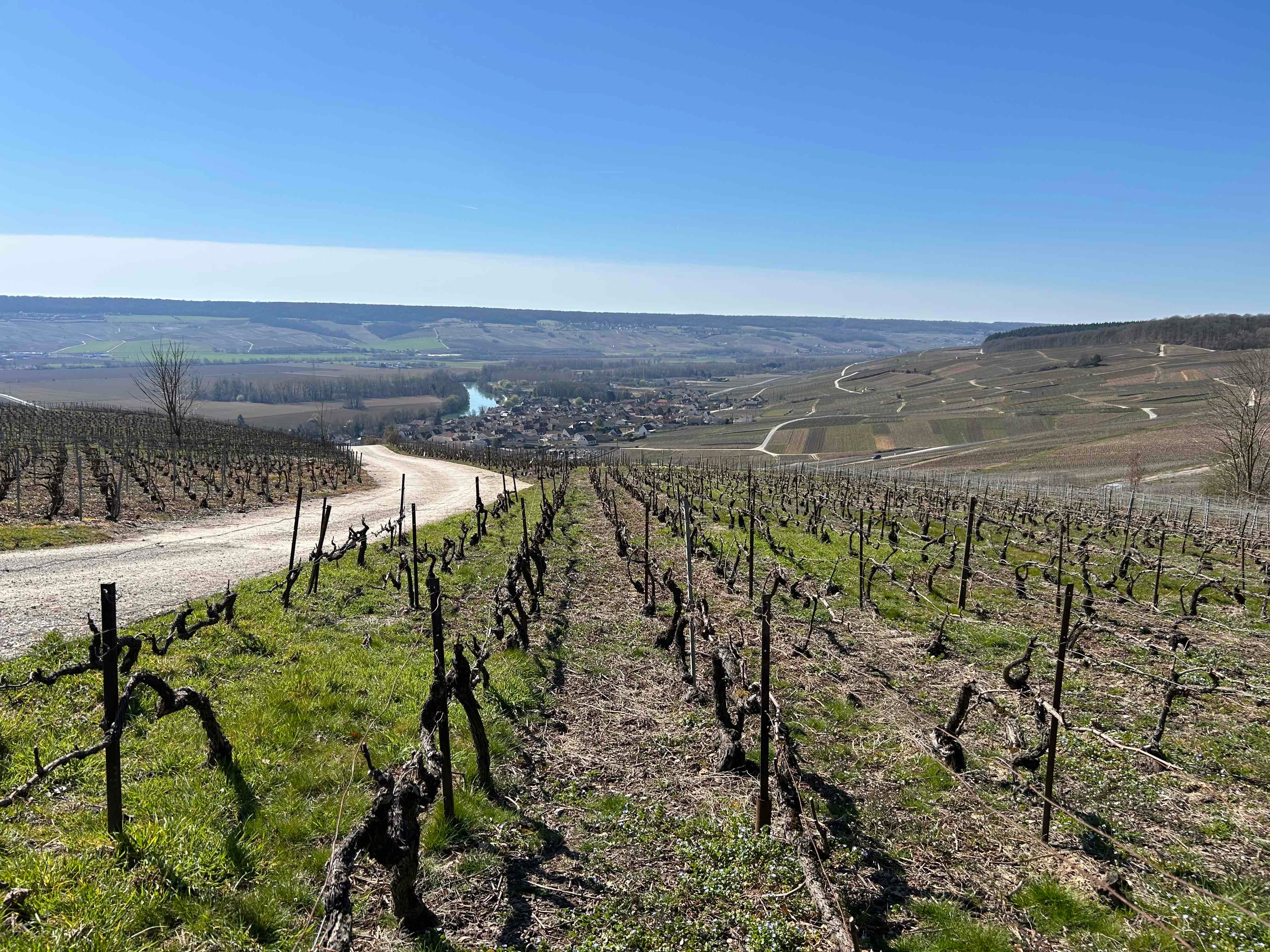
(The roads are chalk, the ground is chalk, everything is chalk…)
“Why can’t we have this in America?” Nate asked, after a sip of champagne and a bite of baguette. He meant, specifically, that good food shouldn’t be hard to produce. Grain shouldn’t be genetically modified; bread shouldn’t have preservatives, wine should be made with natural processes, without additives. In the seven months we’ve lived outside the U.S., our bodies have changed, especially our digestion: we feel healthier and stronger, and clean, because our food is.
The three weeks we were in France, we walked an average of eight miles each day, preferring the Paris pavement over the Metro, not wanting to miss a moment by being underground – until we got to Champagne, of course, and got to see some of the many kilometers of chalk caves underneath Épernay and Reims, some carved out by the Romans when they built their roads.
The chalk walls are damp, soft, cool, the stacked bottles covered in thick dust. Gajillionaires store their private collections in the caves of specific champagne houses, behind locked gates you can peer through; these ideal conditions, the stable temperature and humidity, are impossible to create anywhere else. L’Avenue de Champagne in Épernay is perhaps the most expensive street in the world, because of the millions of bottles of champagne in the caves and cellars beneath it.
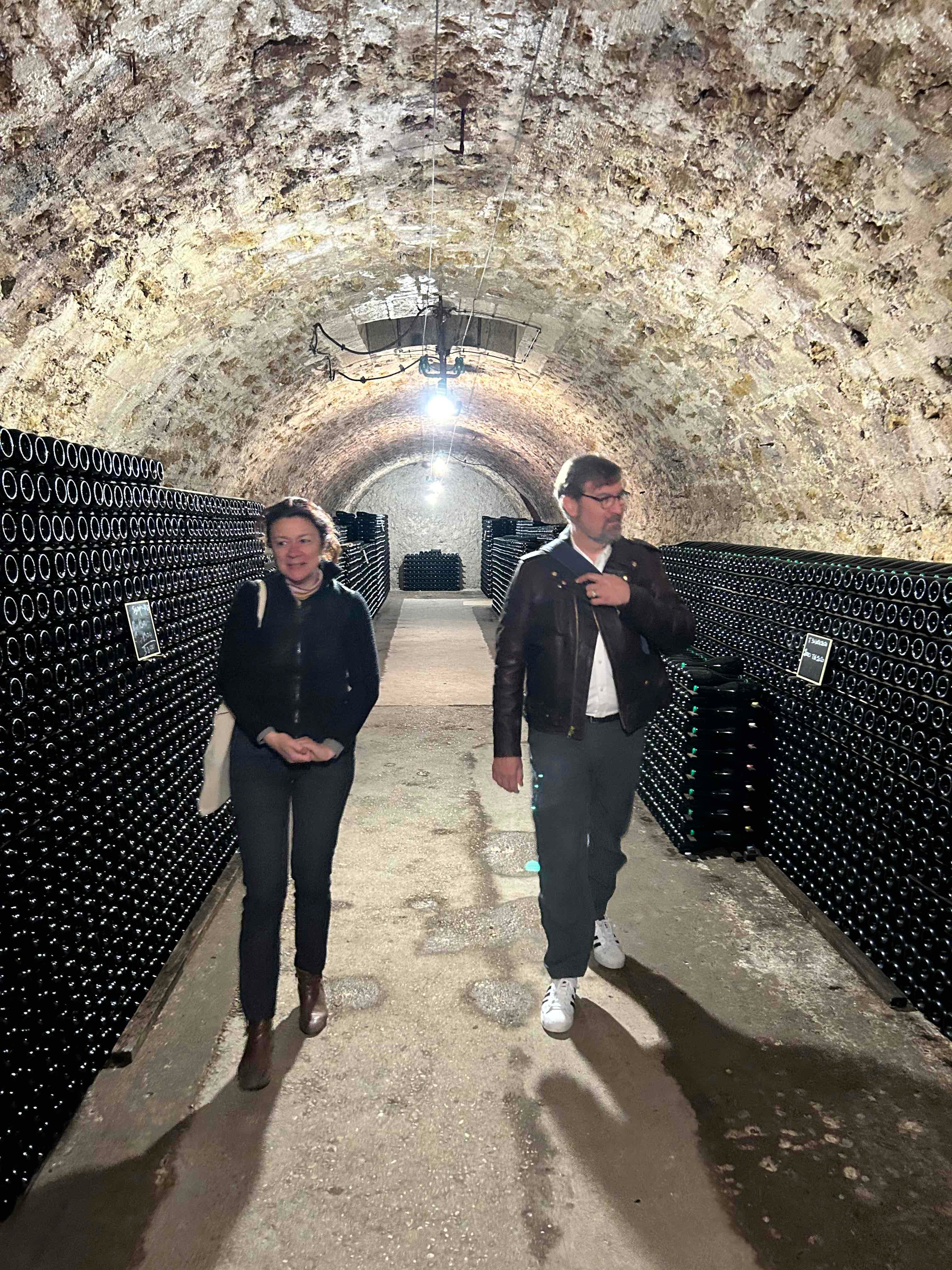
(Nate with Svetlana, our wonderful, wise tour guide; the walls are as wet as they look; somehow, the chalk is solid and stable both wet and dry).
