


4 August, 2026
Medici Fountain, Jardin du Luxembourg, Paris
I am sitting in one of the ubiquitous, in Parisian parks, olive-green metal chairs, resting my feet on another one. There is falling water, and birdsong. The air is soft, perfect, really; there is a light breeze, nothing of yesterday’s humidity.
I’ve visited Paris enough now that I’m not rushing, anywhere. I have time to sit. I understand what a gift this is.
After coffee, eggs with mushrooms, sliced cucumber, and cherry tomatoes from the breakfast buffet at my hotel, I made a sandwich: ham and brie on half a baguette, and tucked it into my purse, along with an apple. I read at the table for a little while, and then filled my water bottle and set off for Eglise Saint Sulpice, which is, like most of the towering cathedrals here, dark, soaring, shadowy, but its chapels are not all restored, refined, attended to. The paint is patchy in places, faded. Outside, you can see where the stonework on one of the towers has been chipped away. The church, while majestic, seems slumped, weary. It’s where Louis XIV was baptized.
I’m starting to understand how all the pieces of Paris fit together now and I can walk and walk and know where I am without looking at the map on my phone.
Here at the fountain, the tree leaves dapple the sunlight that comes through the clouds; the breeze is ruffling the pages of the notebook I’m writing in. Children loll in laps, their legs intertwining with the legs they’re sitting on. A fuzzy duckling swims by, then another, then the mother and an auntie, maybe, follow them, quacking softly.
When I was pregnant, the two times out of five that I stayed pregnant, I would be jolted awake by violent cramps in one calf, the muscle there a tight angry golfball-sized knot under my skin. The only way through was intense, controlled exhales, hard, forced, teeth gritted. I had to try to relax when I what I really wanted to do was scream in pain.
The only way through was through; the sooner I let go, the sooner the cramp would release.
Suffering equals pain times resistance, the Buddhists say, and it’s hard to argue with that. It is ironic that acceptance and letting go are the same thing, in this context.
Next month, at the end of September, it will be five years since my older daughter asked for a “break” in our relationship, on a FaceTime call, when she was a few weeks into her first year of college, at the same school where I teach.
I said “okay.” I thought I understood. I’d left the girls’ father, after an in-home separation due to the pandemic, and had moved in with Nate. She had been away during the separation, on a gap year at a folk school in Norway. We had talked regularly about what was going on; I’d told her, in March, that I was divorcing her dad, and why.
Not long after she returned from Norway, she and I drove from Maine to Wisconsin to pick up the sled dog puppy a former student, Blair, was giving her (the folk school program my daughter did focused on dog sledding and outdoor survival; it was the same school Blair had attended about a decade earlier). Pilot, named for my Alaskan bush-pilot dad, rode in our laps back across the country, depending on who was driving. The night we camped somewhere in Ohio, brave little Pilot growled from inside the tent when she thought she heard someone getting too close.
The rupture in our family, despite years of discord, was hard. I moved out about a month after she came back. There was a bedroom for each girl at Nate’s house (he bought it with them in mind), a place for them, always, but of course it wasn’t the same.
I'd been making excuses to stay married since 2008, when their father shattered the windshield of our car with his fist on Storrow Drive, with me in the passenger seat and the girls in carseats in the back.
That night, he took the girls back to my parents’ house in Western Mass. with my dad and uncle, because the plan was for me to have dinner with my mother, aunt, and cousins, one of whom had just graduated from law school in Boston, which is why we were all there. But I puked my guts out in the bathroom of the restaurant we went to, worrying about the girls.
They didn't feel safe with him, in great part because he didn't feel safe with himself.
I stayed married to him longer than I should have because I knew that he meant well even though he couldn’t always do well. He couldn’t talk to me. He couldn’t talk. Like many men, he was paralyzed by fear, and it came out as anger and judgment and a desperate need to control the behavior of everyone around him, very much like his father and not unlike mine.
I loved him and I thought I understood him; I thought I could help; I thought everything would eventually be okay, but the girls grew up in a time when everything was not okay and it took me too long to understand how much damage I was doing by staying and participating in the charade, and then of course, finding what I needed elsewhere.
I tried to orchestrate an exit, but I made a mess of it instead.
At some point, in those first months back, as she navigated her return and started college, we argued, about who was going to look after Pilot one weekend, but it must have been more. There must be more; I must have done or said things that made her feel unsafe, and like she had nowhere familiar to go. I can imagine that that was devastating, and lonely.
The night she’d left for Norway, I felt like I was going to die from the pain of it, like it was a cramp I needed to breathe through but couldn’t. The separation, us from each other, when it came, was probably only ever going to be violent and it may have been necessary, for her to be able to live her own life, free from anything that ever felt like judgment from me. I respect her choice. I admire her strength. But it hurts.
Five years on, she is married. She speaks with, I believe, my mother, my sister, my nieces. She has family. No one will tell me how she is, but if it would mean they can’t be there for her, I don’t want them to.
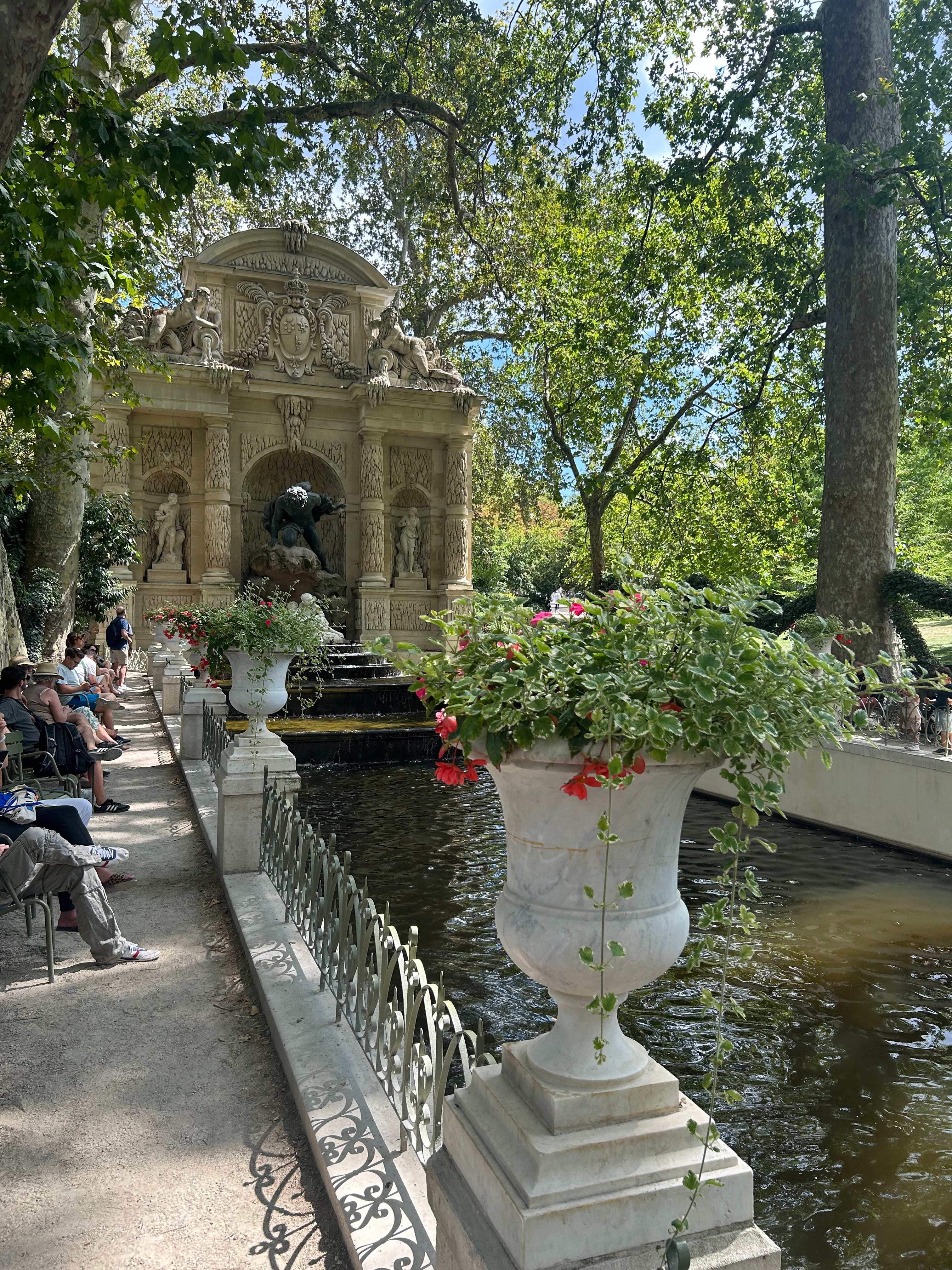
The chairs here at the fountain empty and fill, sometimes getting dragged roughly on the crushed gravel path. Sandwiches come out of thin paper bags; two young women next to me light cigarettes, but a park attendant comes by wagging his finger and shaking his head at them.
People nod off to the sound of the water, the low hum of conversations. The sun emerges between passing clouds and I reapply my sunscreen, something I never did in Gabon because I was never outside; it was just too hot for me, except in June and July, and even then I had to stay in the shade.
I took my last anti-malaria pill this morning.
Last night, at a restaurant near my hotel, I ate a pile of cold green beans with pickled onions, shaved Parmesan, and a hazelnut cream. It was so good I almost wept.
This life is a journey - and you are actually doing it after 2 years and a lifetime back to Maine. It won't be the same as you are not the same.
I'd like to think that hearts will find themselves in time, but my heart breaks for both of yours.
❤️ the metaphorical final malaria pill. I'm happy to read you, in your full editorial freedom. Going to miss you around here