
Consumables, Part Two
What staying in the same place is teaching me about change

I’ve written a lot here about how change feels more internal to me at the equator, because there aren’t the visual and other physical cues of seasonal change that I’m used to at this latitude. They’re here, certainly, but people who are from this part of the world are much more in tune with what feels so subtle that it’s easy for me to miss. I struggle to remember not only what month it is, but what time of year. Time is passing, but it doesn’t feel like it. One of the ways I’ve marked it is the steady depletion of our non-perishable food supply, the first shipment of which came with our HHE (Household Effects) just over a year ago.
Our second Consumables shipment arrived yesterday, finally, after many delays. It does seem somehow miraculous that a crate of boxes packed and loaded in the D.C. Costco parking lot in August could have made its way across the Atlantic to Belgium and then down the West African coast all the way to our front door in Libreville. It felt a little like Christmas, but it’s not so much getting food that we can’t buy here as just not having to spend so much money on food now that we have our staples, like beans and rice and oatmeal, cans of tomatoes and tuna, crackers for cheese, and laundry and dish detergent pods.
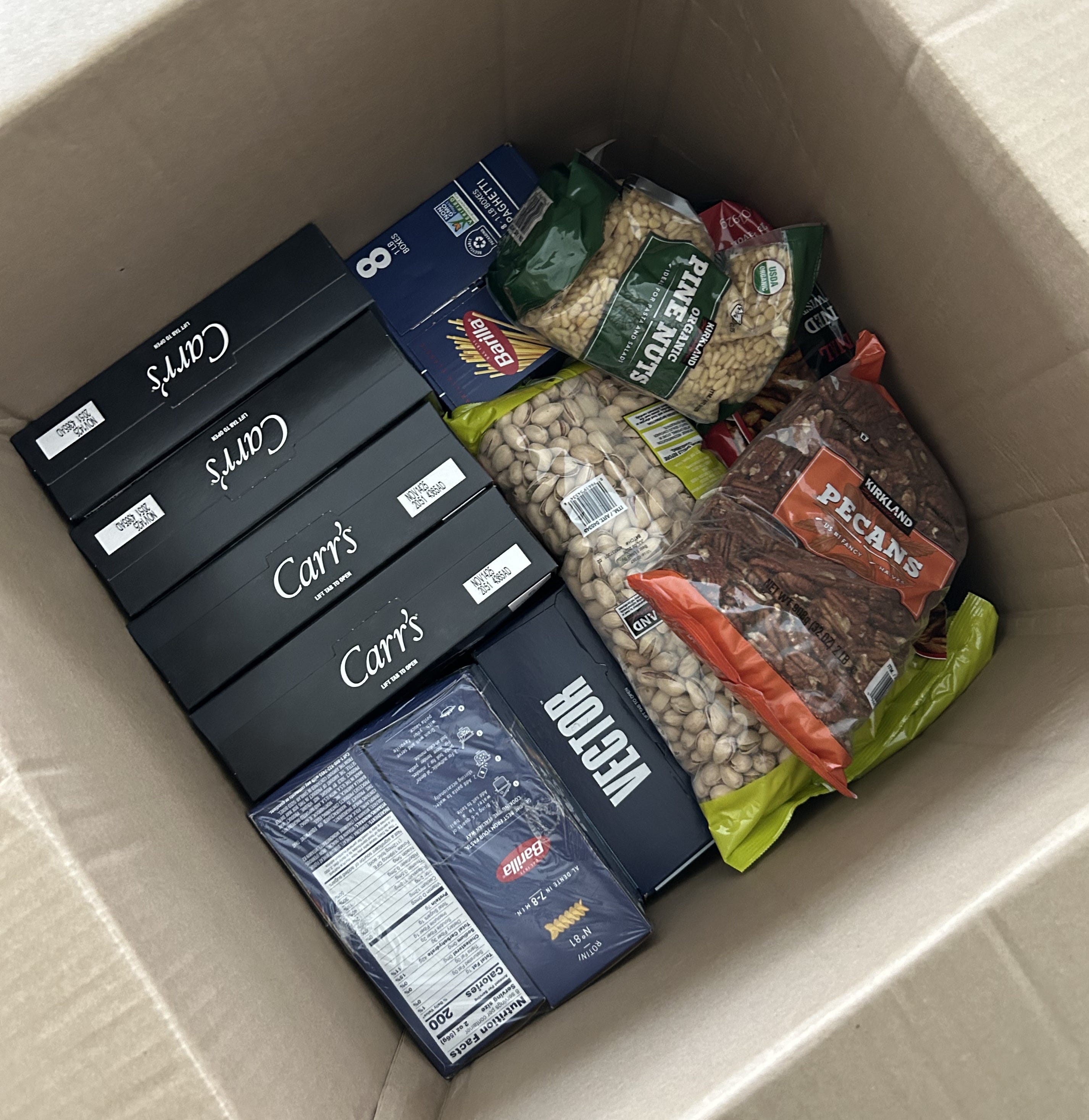
Now our grocery shopping will again be just for fresh fruits and vegetables, yogurt, milk, and frozen meat and fish, when we want it. I can make yogurt (shelf-stable milk is perfect for that) but there’s a lemon Greek yogurt available (most of the time) here that I love and won’t try to replicate.
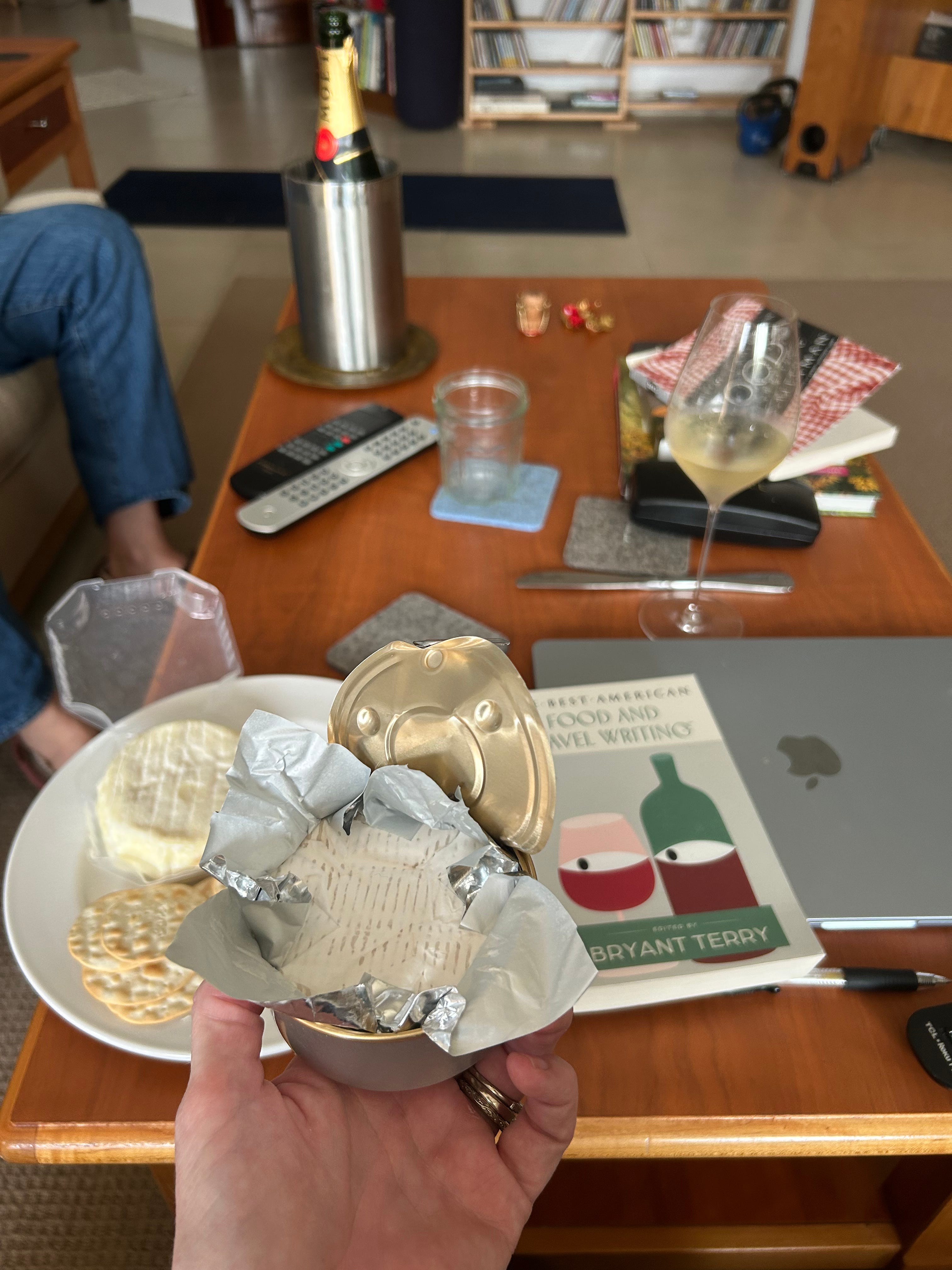
While bombs are being dropped all over Southwest Asia, I’m reading the essay collection I’ll be teaching next year, Best American Food and Travel Writing 2025. There is a big Lebanese population here in Libreville, and many Lebanese restaurants with really good food. I’m limited with what I can eat from restaurants, after multiple bouts of food poisoning have left my intestines on high alert, but we got some hummus the other day that was the very best I’ve ever had. It came with fresh pita and a little bottle of olive oil to pour over it. I love eating with my hands, and last year a Lebanese friend here showed me how to open the pita, turn it inside out, and use the textured side to scoop the hummus. I’d not known that that’s how you’re supposed to eat pita; it makes so much more sense.
Even though I lived in Central Maine for almost twenty-five years, it felt out of time for me in a different way, so busy and occupied as I was raising my daughters and teaching. I knew that every ordinary day was special and fleeting and slipping through my fingers, but that didn’t spare me any grief when that part of my life was over. Going back will not be like going home, but it will be an opportunity to measure myself against who I was when I lived there before the Foreign Service and this time in Gabon, before I got a long look at the world outside academia, before I finally understood that I don’t have to tolerate intolerable things.
As I observed a couple posts ago, some of the best people I’ve met in my life have stayed mostly in one place; some of the least best have travelled and lived widely. I don’t think that’s completely ironic. Some people believe that change is best understood by staying put, and I don’t think that necessarily means external change; I think it means having the opportunity to measure yourself more accurately, perhaps, with your surroundings as something of a constant, the bigger gear, as it were, turning and changing at a slower pace. If we’re constantly moving about, there’s less opportunity for reflection, for discomfort that might yield growth; there’s no room for standing still and reflecting on who we are as the world whirls on around us.
We don’t all have the opportunity to stay put, though; displacement, exile, war, jobs, circumstances both in and out of our control challenge many of us to measure time and ourselves in different ways.
One of the ridiculous things I did in college was try to work a line or phrase, however small, from the movie Chariots of Fire into every essay I wrote, no matter what class it was for: 16th century English poetry, Philosophy of Religion, and even a Latin course on Catullus (there I used “Hinc lucem et pocula sacra,” Cambridge University’s motto), a course I eventually dropped because I was in way over my head. Characters I wrote about might find themselves described as having “regrets, but no doubts”; there were a lot of “tragic necessities” and situations that were “most illuminating.” So if you’re a fan of the movie, as I obsessively was and am (the girls called it “The Running Movie” and could probably recite the script end to end as well) there’s an Easter egg in here somewhere for you. Enjoy.
You can listen to me read this post here:
I think it's going to be a real culture shock to come back to teach. They are the same, but you...not so much :)